Today, when we seek coolness in modern complexes and hotel pools, it is hard to imagine that for decades the most natural place for summer recreation for Plovdiv residents was… Maritsa river.
According to historical records, the first public baths by the river opened their doors back in 1882, when Plovdiv was the capital of Eastern Rumelia. Gradually, in the following years, several beaches were formed on different sections of Maritsa, which quickly became a favorite place for walks, meetings and summer escapes from the heat. For a period of at least half a century, “going to the beach by Maritsa” was a true embodiment of the word “gusto”. Only after the 70s did interest in river beaches begin to decline.
The end of the 20s and the beginning of the 30s marked a new stage in the summer life of the city – the first real city baths appeared under the hills. In 1928, the first swimming facility not only in the city, but also in Bulgaria with a concrete surface, was put into operation in Plovdiv. It bore the long and impressive name “First Bulgarian Summer Bath and Swimming School” and marked the beginning of organized city bathing.
In 1937, a second new beach was opened – at the villa of Dr. Atanas Sabev, behind the Military Palace, near the Old Bridge. Called “Parkbad”, and later known simply as “New Beach”, it had three pools, lifeguards, a fish pond, a buffet with a canopy of cement terraces, fruit trees and vine arches. A real small summer oasis in the city. After 1944, the bathhouse was thoroughly renovated, but a little later it ceased operations.
June 1957 brought a new landmark – behind the “September 9” stadium, a large summer swimming pool with three pools opened: a small one with a diameter of 30 meters and a depth of 60 cm, a second one measuring 50 by 25 meters and a depth of up to 220 cm, as well as a women’s pool measuring 25 by 12.5 meters and a depth of up to 160 cm. In the summer, this place became the center of city life – all the famous Plovdiv residents could be seen near the pools. Neptune holidays were organized, elections for the first “Miss Beach”, and sometimes it seemed like the whole city poured there.
The conditions included: a common changing room, showers, a kebab buffet, without sun loungers and umbrellas. There were wooden grills and natural shade under the trees. Swimsuits could be rented if you didn’t bring your own. The water was changed on schedule. The entrance fee was 30 stotinki. Later, the bathhouse was destroyed during the construction of the Rowing Canal.
The socialist period also brought a number of workers’ beaches, some with free access – at the Glass Factory, “Chengelov”, “Maritsa”, as well as in Kuchuk Paris, on the site of today’s “Neptune”. Swimming pools also appeared east of the “September 9” stadium, next to the “Hristo Botev” stadium.
In 1963, north of the stadium, a new swimming training facility was opened with an Olympic-sized pool of 50 by 25 meters, a smaller pool of 25 by 12.5 meters, a springboard and a diving tower – a place that left a lasting mark on the city’s sports history.
Later, in the 1980s, the beach in front of Novotel also became particularly popular – a space for socializing, summer entertainment and showing off new swimsuits. The entrance fee was 2 leva, and the place is remembered as one of the emblematic summer experiences of Plovdiv during socialism.
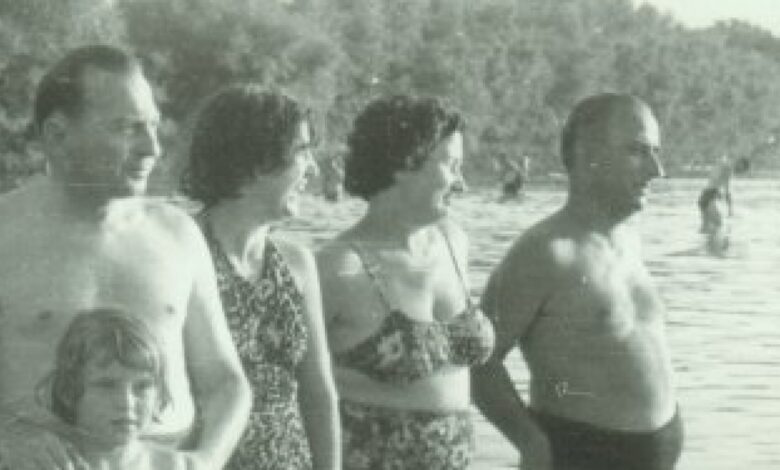
Today, only memories, yellowed photos and stories remain of these baths, and the most relevant are the Instagram spots, suitable for shots on social networks.