Between the hills live religions and cultures, intertwined in millennial harmony – from pagan cults and ancient synagogues to Renaissance temples and Muslim mosques. A walk through them is a real journey through time, and today our guides are Theodore from Bulgarian Architectural Modernism and Iliya from Free Plovdiv Tour.
Even in ancient times, when Philippopolis was a flourishing Thracian and later Roman city, its inhabitants prayed not to one, but to many gods. Archaeological finds testify to cults to the Thracian Horseman, a symbol of eternal victory and fertility, to the god Sabazius (Zagreus) – the mystical god of natural forces, as well as to Apollo, Dionysus and even to the Roman emperor himself, who was revered as a deity. These ancient sanctuaries were the first spiritual landmarks of the people who lived here
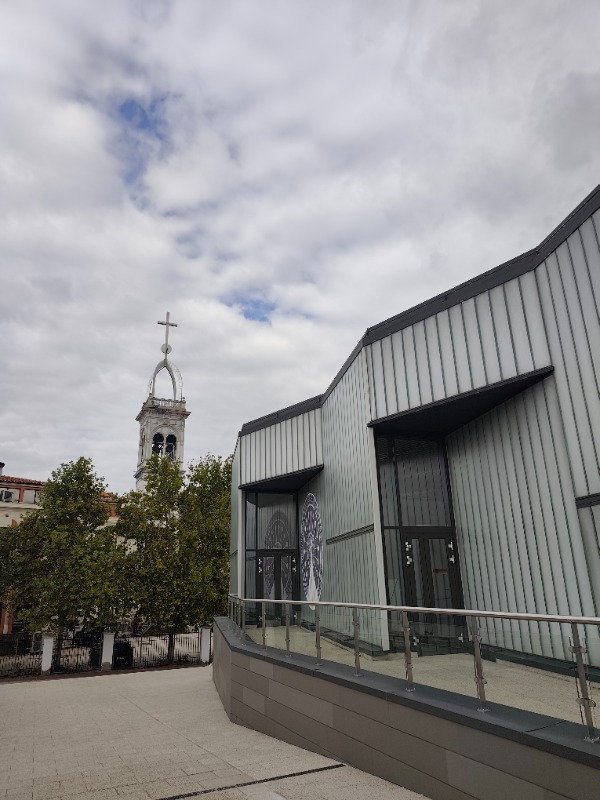
Our first stop is the Episcopal Basilica of Philippopolis – one of the most magnificent early Christian monuments in Europe. It is believed that the basilica was built after 313, when Christianity was legalized in the Roman Empire. The church was the heart of Christian life in the city between the 4th and 6th centuries before being destroyed and abandoned, perhaps as a result of a strong earthquake. After its abandonment in the 10th-12th centuries, a large Christian necropolis with a cemetery church decorated with exquisite frescoes appeared on the site.
Right opposite it rises the Cathedral of St. Ludwig – the largest Catholic church in Plovdiv. Its history begins in 1843, when Bishop Andrea Canova came to the city and laid the foundations of the new Catholic community. Built by the Bratsigov master Ivan Boyanin and consecrated in 1861, it impresses with its Florentine bell tower, designed by the architect Mariano Pernigoni. Its five bells – a gift from Pope Leo XIII – ring out the city to this day. The Chirpan earthquake (1928) severely damaged the church building. In 1931, it was also struck by a natural fire that destroyed the organ, the main altar and the carved ceiling of the middle nave. After the fire, the entire church was rebuilt and decorated with paintings by the artist Krastyo Stamatov. The building was restored to its present appearance by architect Kamen Petkov
We continue to the church “St. Paraskeva”/St. Petka Stara, erected in 1836 with the donations of the Plovdiv chorbadjiya Vulko Chalakov. Here the history is turbulent – the temple passed through Greek possession, then returned to Bulgarian hands again.
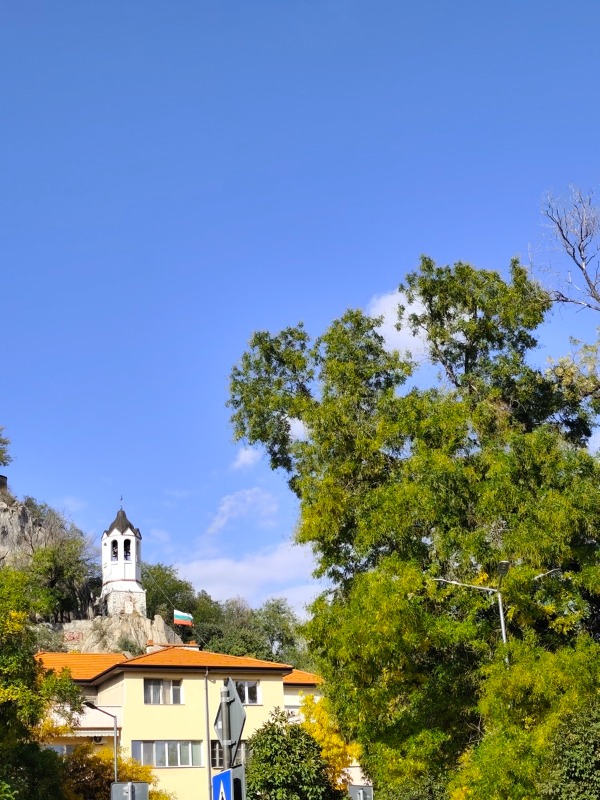
Although today there is no memory of it, the remains of the ancient synagogue of Philippopolis – the only one of its kind in Bulgaria, were located on the modern boulevard “Princess Maria Luisa”. Once the life of the ancient Jewish community was bustling here. The mosaics with menorahs and inscriptions in Greek testify to the time when different beliefs coexisted side by side. It was finally destroyed at the end of the 6th century.
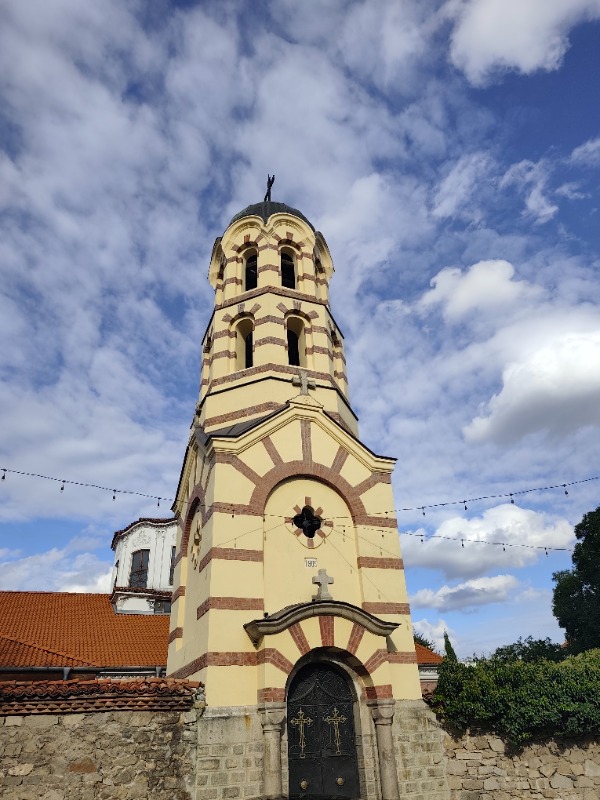
From there the path takes us to “St. Nedelya” – a temple that carries the spirit of the Bulgarian Renaissance. Mentioned as early as 1720, it was destroyed and rebuilt more than once. Its old iconostasis from 1766 is still kept today in the chapel erected in the courtyard.
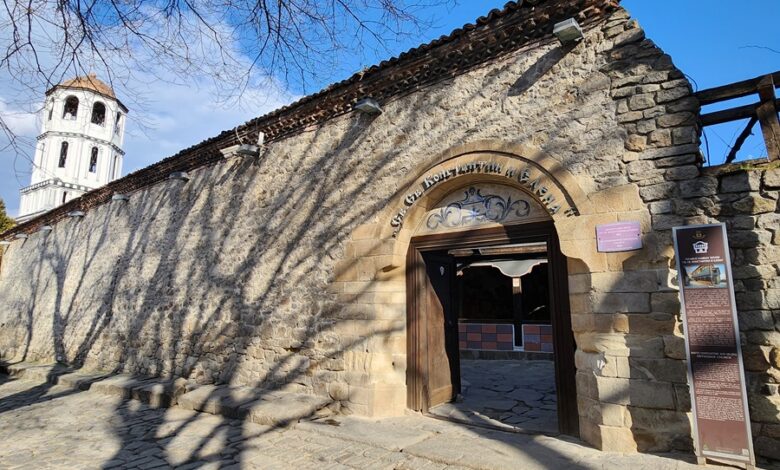
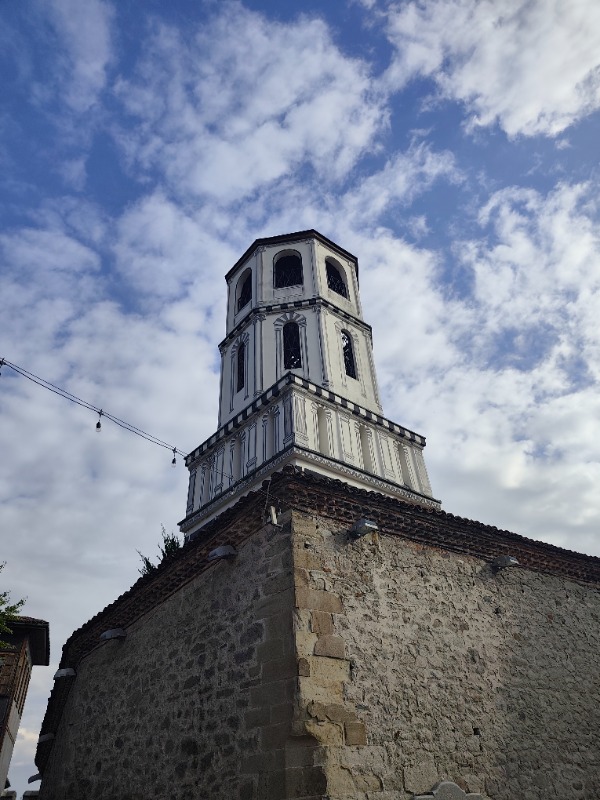
Climbing the cobblestone streets of the Old Town, we reach one of the most ancient churches under the hills – “St. Constantine and Helena”. According to legend, the Christian martyrs Severian and Memenos were beheaded here in 304. It is believed that another 38 people died there for preaching Christianity. Over the centuries, the temple has burned, collapsed and been resurrected again, thanks to generous donors such as Valko Chalakov and Todor Moravenov. The last major renovation was carried out in 2007 and only maintains the authentic appearance of the building itself.
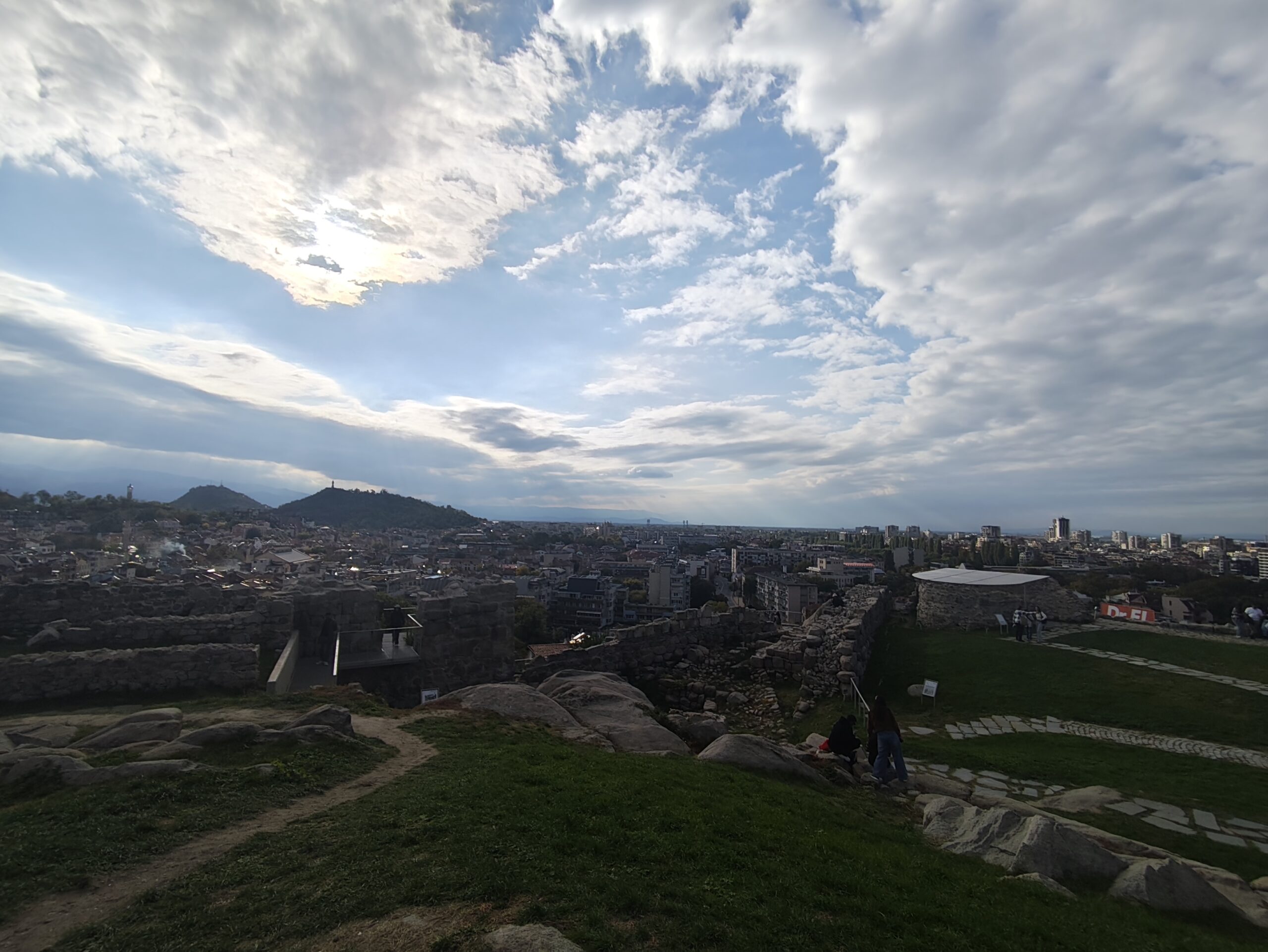
From there we climb Nebet Tepe, from where the guides revealed to us a little of the history of the Shahbedin (Imaret) Mosque, the Armenian temple “Surp Kevork” and the Evangelical Cathedral Church.
We end the walk at Dzhumaya Mosque. Its original name is Muradiye Mosque, because it is believed that it was created during the time of Sultan Murad and it was he who financed its construction. The building is remarkable in itself and, despite the conflicting emotions it evokes, it is accepted not only as a religious, but also as a cultural and historical temple.