Plovdiv is a city with a rich architectural history and many public buildings that have changed their purpose over the years. Some of them are now private homes, while others have been converted to meet new public needs. Here are a few interesting examples that our team discovered:
The former Pioneer House

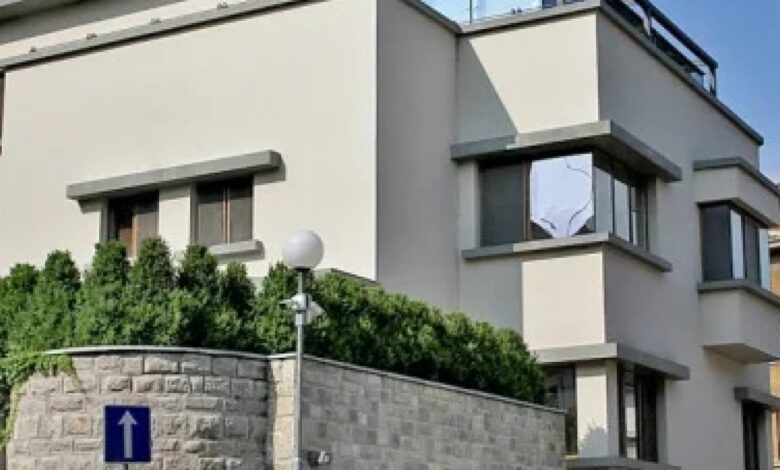
Photo: Bulgarian Modernist Architecture
The building once served as a public center for children and youth, but today it has been converted into private property. Its architecture is significant for the region and is the work of the famous Plovdiv architect Hristo Peev, who plays a key role in the preservation and development of the architectural heritage of the Old Town. What is interesting about it is that it was built in the 1930s and was initially lived there by the wealthy Armenian family of Asvasduryan.
During the socialist era, the building functioned as a Pioneer House – a place to work with children and youth, and after the political changes it was restituted and became private again. For a while, it also housed a café-bar in the late 1990s and early 2000s. Its style is modernist, although many of its elements are now compromised. It is located near other significant buildings, such as the Protestant Church of Lady Strangford, which emphasizes the cultural value of the area.
Today, the former Pioneer House is private property and does not perform a public function, but it remains an important architectural and historical monument, testifying to the social and cultural history of Plovdiv in the 20th century.
The former Second Police Station

Another interesting example is the building of the Second Police Station on Sahat Tepe, on the corner of Lady Strangford and Antim I streets, known among Plovdiv residents as the “House with the Tower”. Located on a corner with a large difference in elevation, it is architecturally distinctive for the area. It was built in 1904 in a modernist style, with influences from Romanticism, initially as a residential building.
The two builders took out a loan from a bank, but were unable to repay it and the property passed to the lender, and later – part of it to the municipality. Previously, there was a mosque on the site, demolished after the Liberation. In 1938, the building became a district police station, with extensions being made for the needs of the police.
In the second half of the 20th century, the building was again converted into housing. The municipal part was divided into separate residential units, which were rented out. Currently, the building remains in a co-ownership regime – the municipal part is still rented out, although some apartments are in poor condition. The house has the status of a cultural monument and is an example of mixed use, although its actual condition reflects the problems with collusion between the owners.
The trolleybus transport rectifier station

This building was also a public property, used for the needs of public transport when Plovdiv had an ecological one. It is known as the “Heart of the Trolleybuses” and is located on the iconic “Otets Paisii” street. It was the first trolleybus stop under the hills, and the building itself was completed in 1957.
Recently, it was converted into a private home and is an interesting example of adapting industrial architecture to residential needs.
All these metamorphoses tell the story of a city in constant motion and of architecture that knows how to adapt to the times.